I’m back after taking a month off. Okay, more than a month. Classes, working summer school, and not being able to sleep have been taking a toll on me.
This month, I have been exploring ways to reduce the plastic I use in my daily life. A curious question popped up in my head when I was ordering my new Mill (I’ll discuss this nifty gadget some other time): Does incorporating more sustainable practices into daily life reduce anxiety?

What is eco-anxiety?
First, we need to understand what eco-anxiety is. Eco-anxiety is when environmental issues are “… a source of significant stress and anxiety” (Suriya, 2024). This anxiety can be increased by a perceived lack of control, guilt, or further exacerbated by generalized anxiety disorder (GAD). I also found another resource that used the term climate change anxiety (CCA). However, some contest that CCA and say it is not an actual disorder, while others say it is genuine (Schwartz et al., 2022).
The thing is, like most mental health issues with established names and terminology, it always starts with a naysayer. Later, someone does the research and shows evidence to the contrary. It is a process. I bet in another 10 years, there will be some established language for it.
So, what does nature do for mental health?
The exposure response to nature is under-researched (White et al., 2019). I mean it makes sense considering how taxed our attention, finances, and other aspects of our lives are. Interest in nature can seem like a niche subject at times, especially if you live in the Los Angeles area like I do. But 120 minutes of nature exposure is good for our mental health (White et al., 2019).
I don’t even exercise that much to be honest.
Nature and eco-anxiety can be linked to a higher socioeconomic status (SES).
As my hubby would say: “When I was poor, I didn’t have time to worry about that stuff.” More money sometimes equals more problems. It is a sentiment you can understand if you use Maslow’s hierarchy of needs as a framework.

If you’re constantly in survival mode, you’re probably not thinking about reducing your plastic use. You are more concerned with having necessities like food, water, and shelter, and not smelling like you’ve just worked a 12-hour day. You will use the most affordable option because it is the only choice available to you.
Over 10 years ago, before I stopped eating meat, I spent a few solid months living off ramen bags and Costco hot dogs. Life was expensive when I couldn’t find work. Oddly enough, enjoying a park or going for a walk was the cheapest thing I could do.

As a sidenote, I went vegan shortly afterwards. The 99-cent store was the go-to place for cheap vegans. Of course, I still go to Dollar Tree, but I miss the 99-cent items.
How to prevent food waste and what to ultimately do with it if you have ADHD…
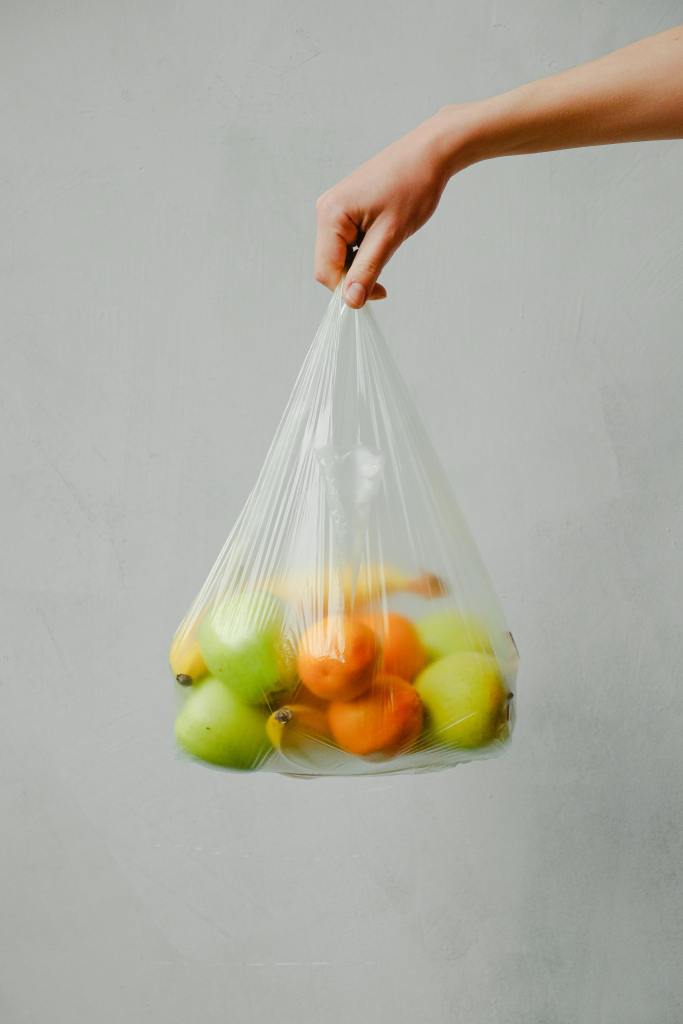
For me, food waste is a concern. I have a four-person household and three dogs. Yes, my dogs do eat some of the things I forget about, but they can’t eat everything. Three of the people in my house have ADHD, so there is usually at least one cabbage or some meal prep that gets forgotten about. Modifying my fridge organization by putting veggies on the door instead of condiments helps. However, for everything else, I rented a Mill. The Mill can be rented for $35 a month or bought, and it recycles your food waste into good stuff for your garden. If you use the link then you’ll get $150 off your purchase. Of course, you could compost food like everyone else, but when you have ADHD, sometimes that is unrealistic, and you end up spending more money because your house stinks.

Try to buy more sustainable items.
There are plenty of online retailers that offset carbon emissions and sell sustainable items. They also likely even tell you how to recycle some of those items.
Amazon has plenty of options, so I’ll compile and share links to what I like at some point.
For starters, there is Thrive Market, where your items will be cheaper than Whole Foods.
Zero Waste Store is another favorite of mine if I am looking for sustainability kits or specific items. Their pricing is affordable, though I have found some items, like a soap dish, a little cheaper on Amazon.
Ilia Beauty lists how to recycle their products. My link will give you $20 off your first purchase and you’ll earn 2,000 points if you spend over $55. There are a lot of makeup and skincare options out there.
What if I just need to know how to recycle?
The Pact Collective has recycling boxes at Ulta Beauty stores and some Nordstrom stores. You can bring items there. You can also look up brands they work with.
Terracycle also lists information on their website.
Honestly, just a general Google search will tell you what you need to know.
Whatever I fixate on, I’ll post as usual. I feel renewed after taking a little break. The next project I am working on is minimizing my wardrobe. I’ve been reading about the benefits it can have for ADHDers. It could make for a good vlog subject.
References
McLeod, S. (2025 August 3). Maslow’s hierarchy of needs. https://www.simplypsychology.org/maslow.html
Schwartz, S. E. O., Benoit, L., Clayton, S., Parnes, M. F., Swenson, L., & Lowe, S. R. (2022). Climate change anxiety and mental health: Environmental activism as buffer. Current psychology (New Brunswick, N.J.), 1–14. Advance online publication. https://doi.org/10.1007/s12144-022-02735-6
Suriya. (2024 November 6). The connection between mental health and sustainability: how taking care of the planet can improve your well-being. https://blog.zerocircle.eco/en/the-connection-between-mental-health-and-sustainability-how-taking-care-of-the-planet-can-improve-your-well-being#:~:text=Environmental%20issues%20can%20be%20a,that%20contribute%20to%20positive%20change
White, M.P., Alcock, I., Grellier, J. et al. Spending at least 120 minutes a week in nature is associated with good health and wellbeing. Sci Rep 9, 7730 (2019). https://doi.org/10.1038/s41598-019-44097-3
 Witch Psych
Leave a comment