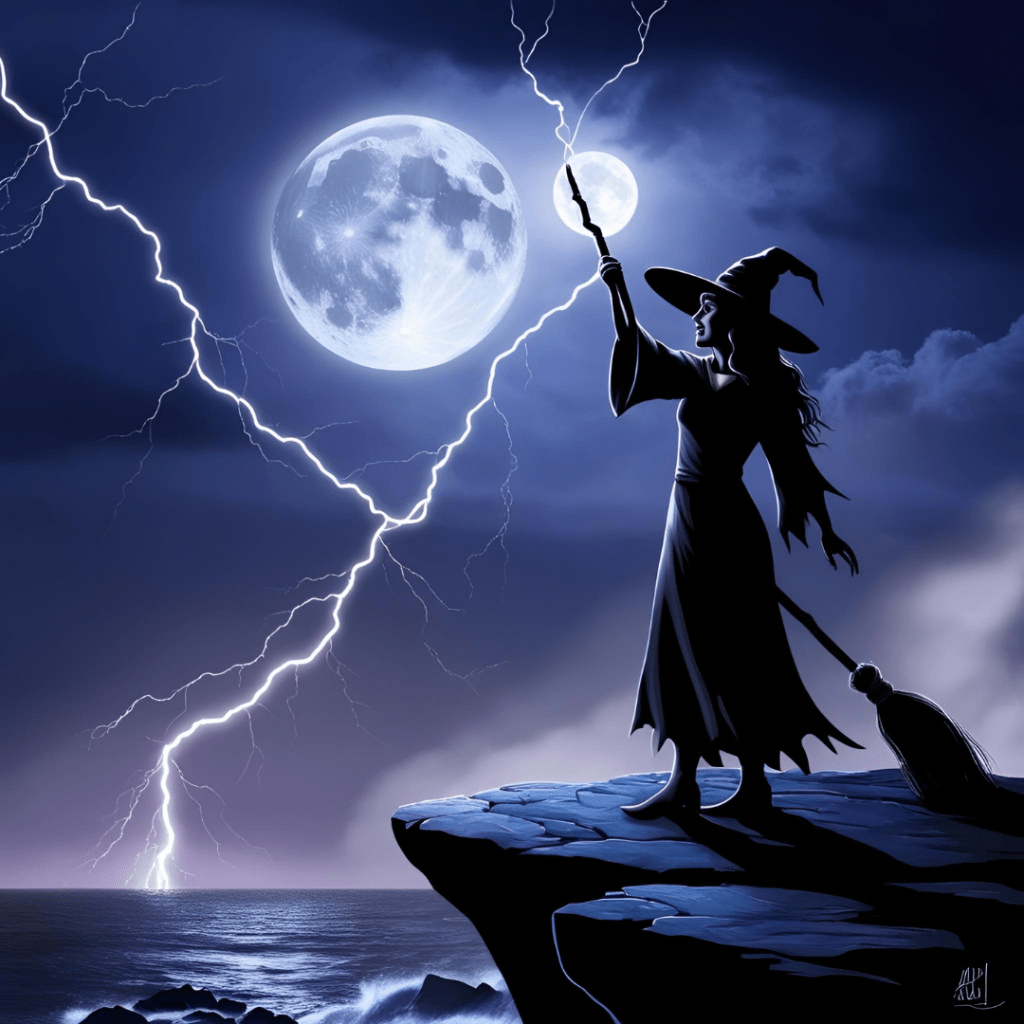
The classic witch with her broom, wand, and hat under the moonlight in complete black. Some image her as something out of wicked with green screen, a massive nose, and the general appearance of an old hag. Sometimes she’s stirring something up in her cauldron or, in the case of the goddess Circe, she’s turning people into animals.
The archetype of the witch has come to represent independence, wisdom, balance, change, and nature. Ariel Gore said in her article for Psychology Today that: “It’s about resisting the false dichotomy of ‘good girls’ and ‘bad girls.’” I’d have to agree and I followed my ADHD down a magical rabbit hole.
Anytime I go down a rabbit hole such as this, I like to start with folklore. To be honest, most of the rabbit holes I go down start with folklore. I enjoy storytelling, culture, and attempt to explain some of the unexplainable.
The witch predates the Bible and is linked to Ancient Mesopotamia. In cuneiform, there is a series of tablets with a ritual for an exorcism. This work is refered to as the Maqlú tablets and maqlú translates to “burning” (Young 2025). It appears this fire had a cleansing function to address some sort of need wheither its mental illness or actual possession. Though, I am inclined to think it was an issue of mental illness before there was a scientific understanding of such conditions.
Before the Bible, it appears that the witch was not necessarily labeled a witch. Instead, they were healers or wise folks. Arthur C. Clarke once said, “Magic’s just science that we don’t understand yet.” So these titles and descriptions do make a lot of sense.
In the Hebrew Bible (Old Testament), there is the “Witch of Endor”. The first king of Isreal, Saul, exiles all the magical folk. However, he wants to know the outcome of a future battle. He then seeks out this woman and asks her the conjour up the spirit of the prophet Samuel. All while incognito of course…
“When the woman reminded him of the law against practicing her art, he assured her that she would be protected. The woman accordingly conjured up a spirit identified by Saul as Samuel. The spirit informed Saul that he and his three sons would die in battle the next day and that the Israelites would fall to the Philistines.” (Encyclopedia Britannica 2023).
The evil witch doesn’t really seem to appear till medieval times as far as I can tell. Tales of her get really wild to say the least. They become associated with the devil. Also, largely, witch becomes a gender-specific term while men are sorcerers. Did some bad luck befall you? Well just go ahead and blame the witch. Is there plague? Blame the witch. Think the movie Season Of The Witch with Nick Cage and Ron Perlman but with a lot less hopefulness.
In 1487, the Burning Times kicked off. Though, there is some debate over what this period is called. Regardless, it starts with the publication of the Malleus Maleficarum (Witches’ Hammer or the Hammer of Witches depending on the translation) by Heinrich Kramer and allegedly Jakob Sprenger (Ungvarsky 2024). It is worth mentioning that not all sources seem to mention Jakob Sprenger though.
The Malleus Maleficarum is something I’ll cover later because it is its own rabbit hole. To summarize briefly, it is the how-to-guide written by a Catholic Clergyman (Heinrich Kramer) on dealing with witches. Europe was ripe with witch hunts and fear as a result.
Estimating how many witches died during this time is hard. The estimate is between 40,000 and 60,000. Both men and women were put to death but the majority were women (Gendercide.org).
The conclusion of an analysis on Scottish healers and midwives sort of sums up what happened next rather nicely:
”Across all 142 people, many aspects of their work are identifiable within more contemporary nursing and midwifery practice including their use of rituals, treatments, and holism. Mostly the accused were folk-practitioners, but a few (1500s/early 1600s) appear to have been healers working akin to physicians. Following the Protestant reformation (1560) their work, unlike that of physicians, was marginalised, considered unorthodox and harmful because they were women and/or their work reflected Catholicism. European hospital nursing originates in the monastic houses, but little is known about these early religious nurses. This study is novel in suggesting that whoever taught these accused witch/healers may have been connected to the monastic hospitals pre-Reformation.” (Ring et al. 2024).
I’d say the next major event is the Salem Witch trials which took place between 1692 and ended in 1693. I wrote a paper about this period of time for one of my classes. I’ll do another much more interesting post about it later. More than 200 people were accused and 20 people were put to death. One of which was a man. The youngest accused was a 4-yr-old girl.
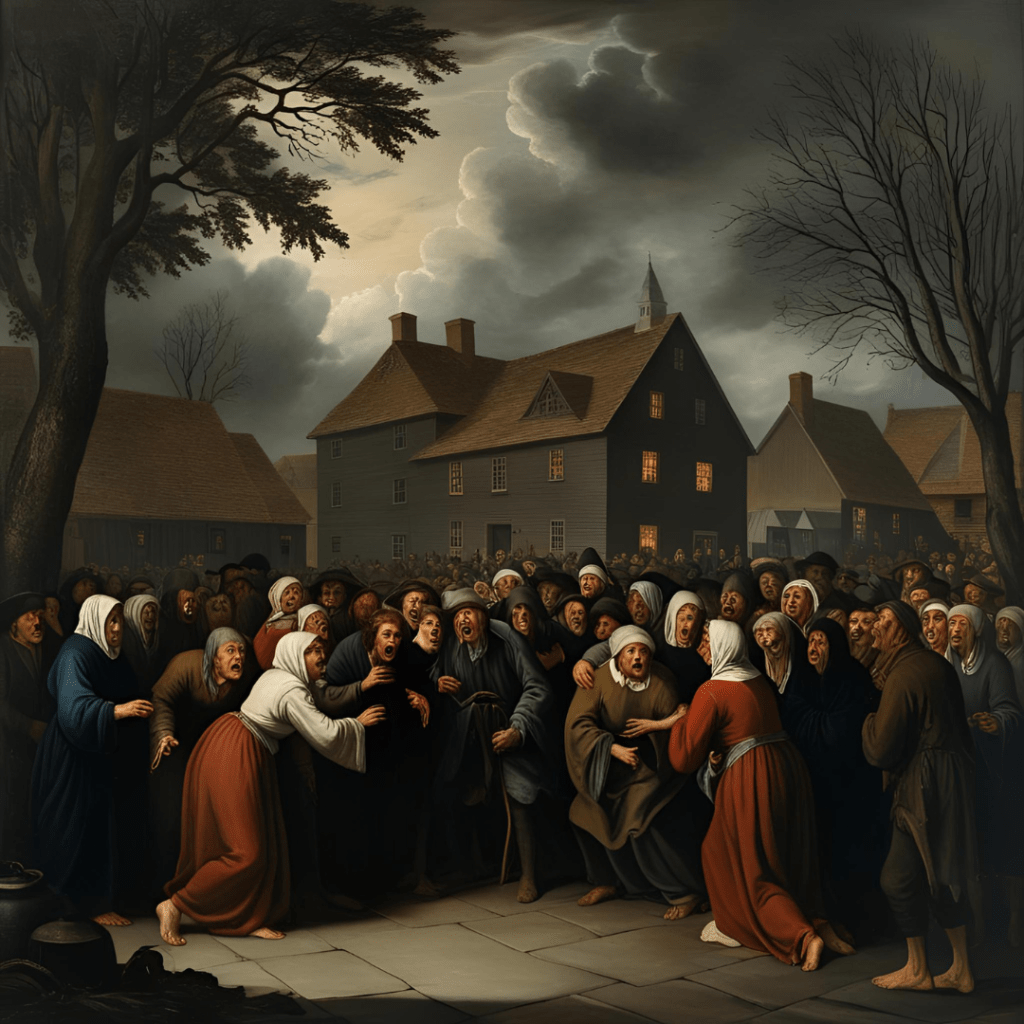
In Salem the archetype of the witch is very much associated with evil. Women were accused of being witches simply because someone’s cow died, they wore red, or were maybe a burden on the community for some reason. Not really a huge surprise there. The madness finally stopped when the governor pardoned everyone.
After Salem, the classic witch archetype involves what I began this trip with. You have the broomsticks, black cats, and in 1939 you get green skin with The Wizard of Oz. You get some pop culture stereotypes popping up. However, I wouldn’t say attitudes shift significantly till the Satanic Panic of the 80s in the US. Witches became firmly associated with Satan again during this panic. The 1987 movie The Witches of Eastwick didn’t necessarily help though I can’t say that I didn’t enjoy Cher in that movie.
In the 90s we get another shift with movies like Practical Magic and The Craft. These movies, however cheesy at times, likely got more individuals interested in Wicca. I mean my interest was peaked for sure. Also, Practical Magic is still a guilty pleasure of mine.
The witch is no longer something to be feared. The archetype of the witch corresponds with nature, healing, independence, and feminism. You can go on TikTok and find WitchTok. Wicca is now officially recognized as a religion. Yes, sometimes the village witch is also the village weirdo but aren’t we all a little weird in our own way?
That’s all for now… I think I left something in my cauldron.
References
Fristcher, L. (2023 December 4). The Fear of Witchcraft or Wiccaphobia. VeryWell Mind. https://www.verywellmind.com/fear-of-witchcraft-2671821
Gendercide.org. (N.d.). Witch-hunts in early modern Europe (circa 1450-1750). https://www.gendercide.org/case_witchhunts.html
Gore, A. (2019 October 15). Does witchcraft hold the secret to happiness? Psychology Today. https://www.psychologytoday.com/us/blog/women-and-happiness/201910/does-witchcraft-hold-the-secret-happiness
Ring, N. A., McHugh, N. M., Reed, B. B., Davidson-Welch, R., & Dodd, L. S. (2024). Healers and midwives accused of witchcraft (1563-1736) – What secondary analysis of the Scottish survey of witchcraft can contribute to the teaching of nursing and midwifery history. Nurse education today, 133, 106026. https://doi.org/10.1016/j.nedt.2023.106026
The Editors of Encyclopaedia Britannica (2023, March 31). Witch of Endor. Encyclopedia Britannica. https://www.britannica.com/biography/Witch-of-Endor
Ungvarsky, J. (2024). Malleus maleficarum. https://www.ebsco.com/research-starters/literature-and-writing/malleus-maleficarum
Wikipedia contributors. (2025, March 5). Witch (archetype). In Wikipedia, The Free Encyclopedia. Retrieved 15:44, April 30, 2025, from https://en.wikipedia.org/w/index.php?title=Witch_(archetype)&oldid=1278931475
Wikipedia contributors. (2025, April 22). Witchcraft. In Wikipedia, The Free Encyclopedia. Retrieved 15:44, April 30, 2025, from https://en.wikipedia.org/w/index.php?title=Witchcraft&oldid=1286938453
Young, S. (2025 Feburary 28). Mesopotamian magic: ancient tablets reveal a world of witches, sorcerers, and exorcists. Ancient Origins. https://www.ancient-origins.net/history-ancient-traditions/mesopotamian-witchcraft-0011494
 Witch Psych
Leave a comment